Home batteries
 Commercial energy storage
 EV chargers
 Installation
Which home battery suits you?
A home battery stores the solar power you generate during the day, so you use it yourself in the evening instead of buying it back at a premium. From 2027 the Dutch net-metering scheme ("salderingsregeling") ends, and that is when the difference really starts to show. For an average household 5 to 10 kWh is enough. A larger home with a heat pump and electric car quickly needs more, and then a modular system you can expand later is the better option.
We split the range into two groups. All-in-one systems such as Sigenergy or AlphaESS are complete packages, battery and inverter in one cabinet, simple to install. Modular/expandable systems such as the BYD Battery-Box are built up from separate modules, useful if your consumption may still grow. If you only have a small outbuilding or standalone consumption, also take a look at a plug-and-play battery, which you connect yourself without a certified installer.
What does a home battery cost?
A complete home battery system at hardware level, so excluding installation, sits indicatively between €2,450 and €5,250. The price depends on capacity, brand and whether the inverter is included. Prices vary per configuration, so this is a guideline, not a quote. If you only want to add separate modules to an existing system, look at battery modules; on their own these usually cost between €750 and €3,700 each.
Battery finder: three situations
A family with an annual consumption of around 3,500 kWh and 10 solar panels usually manages fine with 5 to 8 kWh of storage. You catch the peak of a sunny afternoon and use that power in the evening while cooking and watching TV.
If you have a heat pump and an annual consumption of 6,000 kWh or more, 8 to 12 kWh is a more realistic starting point. You already use more during the day for the heat pump itself, so there is less solar power left to store, but in the evening and at night the pump draws heavily again.
If you end up as a household with both a heat pump and an electric car, go for a modular system from 10 kWh with room to expand later. When in doubt about the exact size, choose too much room to grow rather than too little, because adding a second brand alongside is often not possible.
All-in-one or modular: the difference
| All-in-one system | Modular/expandable | |
|---|---|---|
| Build | Battery, inverter and EMS in one cabinet | Separate modules that you stack |
| Ease of installation | Simpler, fewer parts | A bit more work, more cabling |
| Expandable later | Often limited or not possible | Usually yes, within the same brand |
| Suitable for | Fixed, known consumption | Consumption that may still grow |
| Example brands | Sigenergy, AlphaESS | BYD |
What should you look out for?
The main pitfall is compatibility: a SolaX battery only works with a SolaX inverter, and the same goes for most brands. If you already have solar panels with an inverter, that brand often decides your choice for you. If in doubt, ask before you order, because misjudged compatibility is an expensive mistake to put right afterwards.
The honest catch: a home battery is an investment that does not pay for itself overnight. With net metering still in place, the gain per kWh is limited. So do not count on a fixed amount of savings; it differs per consumption pattern, per contract and per year.
What do we take care of?
Alongside a sharp price, we arrange installation through a certified company to the Dutch NEN 1010 standard, and if you wish we connect you to a dynamic energy contract via our partner, without tying you to it.
Frequently asked questions
Is a home battery already worthwhile now, or should I wait until 2027?
That depends on your current contract and consumption. With net metering the gain is limited for now, but after 2027 the payback time comes down faster. For heavy users with a dynamic contract it can already pay off today.
Can I use my existing inverter?
Only if the battery is the same brand or has been explicitly declared compatible. Otherwise you need a new inverter, which raises the investment. If in doubt, see our hybrid inverters for a matching combination.
How many kWh do I need?
For an average family 5 to 10 kWh is usually enough. With a heat pump or electric car, count on more, depending on your annual consumption.
Do you also arrange installation?
Yes, through a certified installation company that works to the Dutch NEN 1010 standard. You get a concrete schedule and price up front.
Roughly what does a home battery cost?
Indicatively between €2,450 and €5,250 for the complete system, excluding installation. Prices vary per configuration and brand, so this is a rough guide, not a fixed price.
Do I have to register my battery with the grid operator?
Yes, a home battery must be registered before it goes into use. The installer usually handles this as part of the installation, but always check this beforehand.
Can I still charge if I already have an EV charger for the car?
Yes, a home battery and an EV charger can work side by side, although your grid connection does need to handle the power of both. See EV charging for the chargers we stock and check whether your situation allows both.
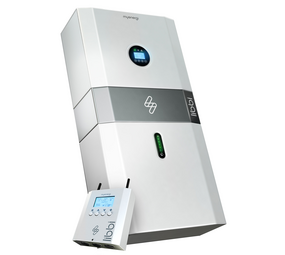
myenergi Libbi 305-sh 3.68kW inver...
myenergi Libbi 305-sh 3...
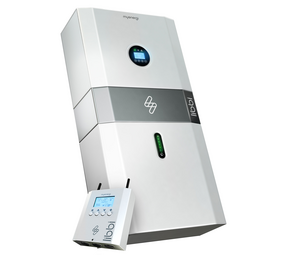
myenergi Libbi 505-sh 5kW inverter...
myenergi Libbi 505-sh 5...
Compleet SigenStor-systeem van 6,0...
Compleet SigenStor-syst...
- Erkende installatie mogelijk
- Merkonafhankelijk advies
- Scherpe outletprijzen
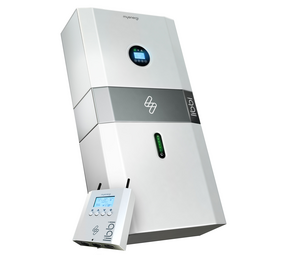
myenergi Libbi 310-sh 3.68kW inver...
myenergi Libbi 310-sh 3...
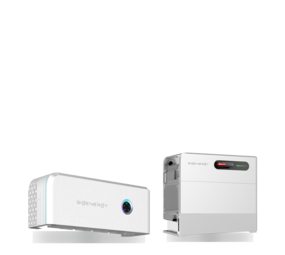
Sigen Energy Controller 6.0 kW (1-...
Sigen Energy Controller...
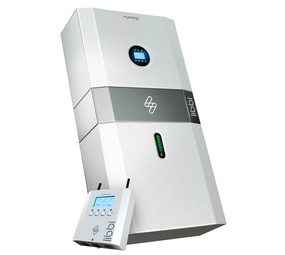
myenergi Libbi 510-sh 5kW inverter...
myenergi Libbi 510-sh 5...
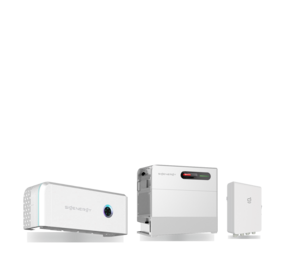
SigenStor 9.04 kWh single-phase wi...
SigenStor 9.04 kWh sing...
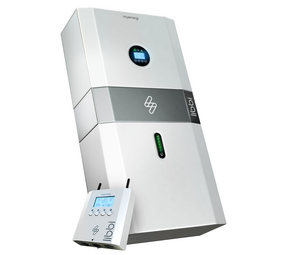
myenergi Libbi 1010 10kW inverter ...
myenergi Libbi 1010 10k...
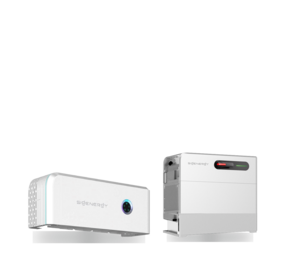
Sigen Energy Controller 8.0 kW (3-...
Sigen Energy Controller...
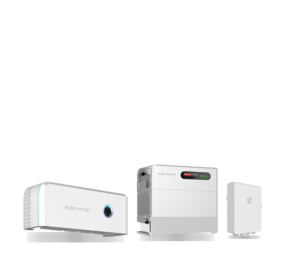
SigenStor 9.04 kWh on three phases...
SigenStor 9.04 kWh on t...
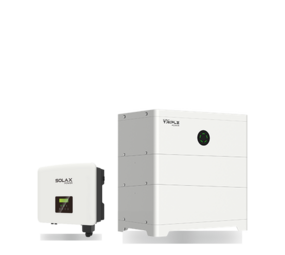
SolaX X1 Hybrid 5.0-G4 with two Tr...
SolaX X1 Hybrid 5.0-G4 ...
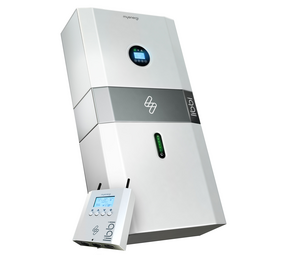
myenergi Libbi 315-sh 3.68kW inver...
myenergi Libbi 315-sh 3...
Overige categorieën in Home batteries
Which home battery suits you?
A home battery stores the solar power you generate during the day, so you use it yourself in the evening instead of buying it back at a premium. From 2027 the Dutch net-metering scheme ("salderingsregeling") ends, and that is when the difference really starts to show. For an average household 5 to 10 kWh is enough. A larger home with a heat pump and electric car quickly needs more, and then a modular system you can expand later is the better option.
We split the range into two groups. All-in-one systems such as Sigenergy or AlphaESS are complete packages, battery and inverter in one cabinet, simple to install. Modular/expandable systems such as the BYD Battery-Box are built up from separate modules, useful if your consumption may still grow. If you only have a small outbuilding or standalone consumption, also take a look at a plug-and-play battery, which you connect yourself without a certified installer.
What does a home battery cost?
A complete home battery system at hardware level, so excluding installation, sits indicatively between €2,450 and €5,250. The price depends on capacity, brand and whether the inverter is included. Prices vary per configuration, so this is a guideline, not a quote. If you only want to add separate modules to an existing system, look at battery modules; on their own these usually cost between €750 and €3,700 each.
Battery finder: three situations
A family with an annual consumption of around 3,500 kWh and 10 solar panels usually manages fine with 5 to 8 kWh of storage. You catch the peak of a sunny afternoon and use that power in the evening while cooking and watching TV.
If you have a heat pump and an annual consumption of 6,000 kWh or more, 8 to 12 kWh is a more realistic starting point. You already use more during the day for the heat pump itself, so there is less solar power left to store, but in the evening and at night the pump draws heavily again.
If you end up as a household with both a heat pump and an electric car, go for a modular system from 10 kWh with room to expand later. When in doubt about the exact size, choose too much room to grow rather than too little, because adding a second brand alongside is often not possible.
All-in-one or modular: the difference
| All-in-one system | Modular/expandable | |
|---|---|---|
| Build | Battery, inverter and EMS in one cabinet | Separate modules that you stack |
| Ease of installation | Simpler, fewer parts | A bit more work, more cabling |
| Expandable later | Often limited or not possible | Usually yes, within the same brand |
| Suitable for | Fixed, known consumption | Consumption that may still grow |
| Example brands | Sigenergy, AlphaESS | BYD |
What should you look out for?
The main pitfall is compatibility: a SolaX battery only works with a SolaX inverter, and the same goes for most brands. If you already have solar panels with an inverter, that brand often decides your choice for you. If in doubt, ask before you order, because misjudged compatibility is an expensive mistake to put right afterwards.
The honest catch: a home battery is an investment that does not pay for itself overnight. With net metering still in place, the gain per kWh is limited. So do not count on a fixed amount of savings; it differs per consumption pattern, per contract and per year.
What do we take care of?
Alongside a sharp price, we arrange installation through a certified company to the Dutch NEN 1010 standard, and if you wish we connect you to a dynamic energy contract via our partner, without tying you to it.
Frequently asked questions
Is a home battery already worthwhile now, or should I wait until 2027?
That depends on your current contract and consumption. With net metering the gain is limited for now, but after 2027 the payback time comes down faster. For heavy users with a dynamic contract it can already pay off today.
Can I use my existing inverter?
Only if the battery is the same brand or has been explicitly declared compatible. Otherwise you need a new inverter, which raises the investment. If in doubt, see our hybrid inverters for a matching combination.
How many kWh do I need?
For an average family 5 to 10 kWh is usually enough. With a heat pump or electric car, count on more, depending on your annual consumption.
Do you also arrange installation?
Yes, through a certified installation company that works to the Dutch NEN 1010 standard. You get a concrete schedule and price up front.
Roughly what does a home battery cost?
Indicatively between €2,450 and €5,250 for the complete system, excluding installation. Prices vary per configuration and brand, so this is a rough guide, not a fixed price.
Do I have to register my battery with the grid operator?
Yes, a home battery must be registered before it goes into use. The installer usually handles this as part of the installation, but always check this beforehand.
Can I still charge if I already have an EV charger for the car?
Yes, a home battery and an EV charger can work side by side, although your grid connection does need to handle the power of both. See EV charging for the chargers we stock and check whether your situation allows both.