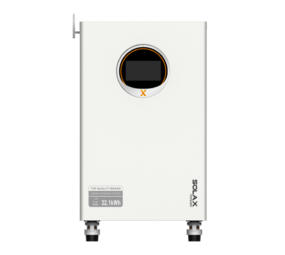
Home batteries
 Commercial energy storage
 EV chargers
 Installation
Which solution suits your business?
For most of our customers, commercial battery storage is about peak shaving: the battery absorbs short, high peaks in your consumption, so your contracted capacity can come down. That directly cuts the fixed costs of your grid connection. A farm with a cooling installation that kicks in early in the morning, or a workshop with heavy machinery drawing a lot of power for short bursts, are typical examples. Capacities start at 30 kWh and scale up to whatever your situation requires.
What should you look out for?
Every business situation is different. Your current connection, your consumption pattern across the day and the seasons, and your future plans together determine which capacity and power you need. That means we cannot sell a system at the push of a button. We first ask for data, such as your consumption profile and your current contracted capacity, before we can give advice and a price.
Home battery or commercial storage?
Businesses with relatively low base consumption and a small connection sometimes manage with a heavy-duty home battery, but as soon as peaks and contracted capacity come into play, commercial storage is the better route. The table below sets out the difference.
| Aspect | Home battery | Commercial storage |
|---|---|---|
| Typical capacity | 5 to 15 kWh | from 30 kWh, scalable |
| Main goal | self-consumption of solar power | peak shaving, lowering contracted capacity |
| Purchase process | fixed models, ready to order | tailored to your consumption profile |
| Typical customer | private home | SMEs, farms, workshops |
| Pricing | indicative price known per model | only via a tailored quote |
If you are torn between the two, also have a look at our home batteries if you suspect your consumption actually fits the residential segment.
Two real-world examples
A farm with a cold store that starts up early in the morning, along with a few other motors kicking in at the same time, can see peaks of 60 to 80 kW in quick succession while average daily consumption is much lower. A battery of roughly 50 to 60 kWh usually absorbs such a peak comfortably, allowing the contracted capacity to come down. That is an indication based on comparable situations, not a promise, because the exact peak pattern of your business determines the final outcome.
An SME workshop with welding equipment and compressors that draw high current intermittently often needs a smaller system, for example around 30 to 40 kWh, because the peaks there are shorter and less extreme than with the cooling installation above. Here too, we only make this concrete after running the numbers on your own metering data.
What does commercial battery storage cost?
For commercial storage we deliberately give no fixed price range, and that is not an evasion but an honest reflection of how this segment works. A 30 kWh system for a workshop with modest peaks costs something very different from a 100 kWh system for a business with a heavy connection and substantial peak consumption. The connection itself, any changes by the grid operator and the required charge and discharge speed also feed into the price. That is why we work here exclusively with a tailored quote, built from your consumption data and contracted capacity.
What do we take care of?
We map out your situation, calculate what peak shaving delivers and put together a system based on established brands. Installation is carried out to the Dutch NEN 1010 standard. A dynamic energy contract through our partner is also available for business connections, without lock-in.
Frequently asked questions
What does commercial battery storage cost?
That depends entirely on your grid connection, your consumption pattern and the capacity you need. A 30 kWh system is priced differently from a 100 kWh system, and the saving on your contracted capacity varies from business to business. That is why we work with a tailored quote rather than fixed prices.
What exactly is peak shaving?
Peak shaving means the battery absorbs short peaks in your electricity consumption, so your grid connection does not have to supply them. That often lets you manage with a lower contracted capacity, which cuts your fixed costs. It works particularly well for businesses with short, predictable peak moments.
How long does the process take, from advice to installation?
It varies per situation, but allow a few weeks for the analysis and the quote, plus additional time for delivery and installation. Larger systems and grid connection questions can extend the lead time.
Can I use agricultural subsidies or support schemes?
There are schemes, and they vary by situation and period. We give no general advice on this here, but we do include it in the conversation about your specific application.
What information do you need to prepare a quote?
Usually your current contracted capacity, a consumption profile from your energy supplier or grid operator covering at least a few months, and a description of the equipment causing your peaks. The more complete that information, the more accurately we can calculate.
Can a commercial battery also provide backup power?
Certain systems can temporarily power part of your business during an outage, but this is not standard on every system and requires separate technology. Mention it during the intake call if it matters to you.
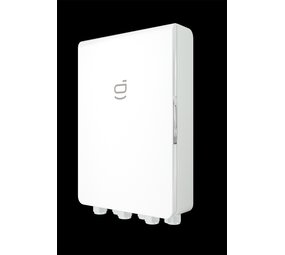
Sigen Energy Gateway HomePro TP (3...
Sigen Energy Gateway Ho...
Single frame for Solax Aelio 50-B1...
Single frame for Solax ...
Single frame for Solax Trene P100K...
Single frame for Solax ...
- Erkende installatie mogelijk
- Merkonafhankelijk advies
- Scherpe outletprijzen
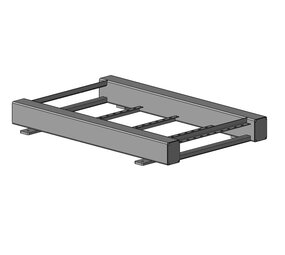
Single frame for Solax Trene Liqui...
Single frame for Solax ...
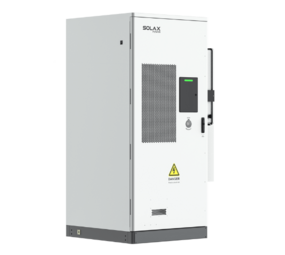
Solax AELIO-B200 battery & cabinet...
Solax AELIO-B200 batter...
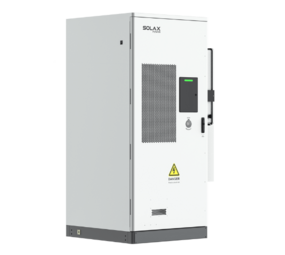
Solax AELIO-B100 battery & cabinet...
Solax AELIO-B100 batter...
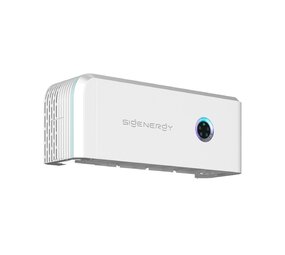
Sigen Energy Controller 30.0 kW Th...
Sigen Energy Controller...
Sigen Energy Controller 25.0 kW Th...
Sigen Energy Controller...
Sigen Energy Controller 20.0 kW Th...
Sigen Energy Controller...

Huawei SUN2000-330KTL-H1 inverter,...
Huawei SUN2000-330KTL-H...
Huawei SUN2000-215KTL-H3 inverter,...
Huawei SUN2000-215KTL-H...
Huawei SUN2000-215KTL-H0 inverter,...
Huawei SUN2000-215KTL-H...
Overige categorieën in Commercial energy storage
Which solution suits your business?
For most of our customers, commercial battery storage is about peak shaving: the battery absorbs short, high peaks in your consumption, so your contracted capacity can come down. That directly cuts the fixed costs of your grid connection. A farm with a cooling installation that kicks in early in the morning, or a workshop with heavy machinery drawing a lot of power for short bursts, are typical examples. Capacities start at 30 kWh and scale up to whatever your situation requires.
What should you look out for?
Every business situation is different. Your current connection, your consumption pattern across the day and the seasons, and your future plans together determine which capacity and power you need. That means we cannot sell a system at the push of a button. We first ask for data, such as your consumption profile and your current contracted capacity, before we can give advice and a price.
Home battery or commercial storage?
Businesses with relatively low base consumption and a small connection sometimes manage with a heavy-duty home battery, but as soon as peaks and contracted capacity come into play, commercial storage is the better route. The table below sets out the difference.
| Aspect | Home battery | Commercial storage |
|---|---|---|
| Typical capacity | 5 to 15 kWh | from 30 kWh, scalable |
| Main goal | self-consumption of solar power | peak shaving, lowering contracted capacity |
| Purchase process | fixed models, ready to order | tailored to your consumption profile |
| Typical customer | private home | SMEs, farms, workshops |
| Pricing | indicative price known per model | only via a tailored quote |
If you are torn between the two, also have a look at our home batteries if you suspect your consumption actually fits the residential segment.
Two real-world examples
A farm with a cold store that starts up early in the morning, along with a few other motors kicking in at the same time, can see peaks of 60 to 80 kW in quick succession while average daily consumption is much lower. A battery of roughly 50 to 60 kWh usually absorbs such a peak comfortably, allowing the contracted capacity to come down. That is an indication based on comparable situations, not a promise, because the exact peak pattern of your business determines the final outcome.
An SME workshop with welding equipment and compressors that draw high current intermittently often needs a smaller system, for example around 30 to 40 kWh, because the peaks there are shorter and less extreme than with the cooling installation above. Here too, we only make this concrete after running the numbers on your own metering data.
What does commercial battery storage cost?
For commercial storage we deliberately give no fixed price range, and that is not an evasion but an honest reflection of how this segment works. A 30 kWh system for a workshop with modest peaks costs something very different from a 100 kWh system for a business with a heavy connection and substantial peak consumption. The connection itself, any changes by the grid operator and the required charge and discharge speed also feed into the price. That is why we work here exclusively with a tailored quote, built from your consumption data and contracted capacity.
What do we take care of?
We map out your situation, calculate what peak shaving delivers and put together a system based on established brands. Installation is carried out to the Dutch NEN 1010 standard. A dynamic energy contract through our partner is also available for business connections, without lock-in.
Frequently asked questions
What does commercial battery storage cost?
That depends entirely on your grid connection, your consumption pattern and the capacity you need. A 30 kWh system is priced differently from a 100 kWh system, and the saving on your contracted capacity varies from business to business. That is why we work with a tailored quote rather than fixed prices.
What exactly is peak shaving?
Peak shaving means the battery absorbs short peaks in your electricity consumption, so your grid connection does not have to supply them. That often lets you manage with a lower contracted capacity, which cuts your fixed costs. It works particularly well for businesses with short, predictable peak moments.
How long does the process take, from advice to installation?
It varies per situation, but allow a few weeks for the analysis and the quote, plus additional time for delivery and installation. Larger systems and grid connection questions can extend the lead time.
Can I use agricultural subsidies or support schemes?
There are schemes, and they vary by situation and period. We give no general advice on this here, but we do include it in the conversation about your specific application.
What information do you need to prepare a quote?
Usually your current contracted capacity, a consumption profile from your energy supplier or grid operator covering at least a few months, and a description of the equipment causing your peaks. The more complete that information, the more accurately we can calculate.
Can a commercial battery also provide backup power?
Certain systems can temporarily power part of your business during an outage, but this is not standard on every system and requires separate technology. Mention it during the intake call if it matters to you.