Home batteries
 Commercial energy storage
 EV chargers
 Installation
De juiste batterij. Goed geïnstalleerd.
Ontdek betrouwbare thuisbatterijen tegen scherpe outletprijzen. We adviseren je onafhankelijk en verzorgen desgewenst de volledige installatie.
Bekijk thuisbatterijenOntdek betrouwbare thuisbatterijen tegen scherpe outletprijzen. We adviseren je onafhankelijk en verzorgen desgewenst de volledige installatie.
Bekijk thuisbatterijenGarantie rechtstreeks via de fabrikant
Eerlijk en afgestemd op jouw woning
Slim laden en ontladen met een passend energiecontract
Shop by capacity
Your annual consumption, solar panels and heavy power users give a first indication. The outcome stays indicative. In the end, your daily usage profile determines which battery makes sense.
Battery finder
Pick what you are looking for and answer a few questions about your situation. You will see at most three products that match on those points. If fewer match, we show fewer. This is an indication, not installation advice, because your meter cupboard (the "meterkast" in Dutch homes) in the end determines what is allowed.
What are you looking for?
Unsure about your connection or what fits in your meter cupboard? Tell us about your situation.
Installation arranged straight away
Installing an EV charger on an outside wall starts at €729 including 21% VAT. For a home battery inside the house, the basic package starts at €1,349 including 21% VAT. You see in advance how much cable, conduit and digging the package includes.
If the route is longer or the system is over 10 kW, we prepare a quote first. Additional work is only added after it has been recorded on a work order.
Tailored where it needs to be
Above 10 kW, with a long cable route or a non-standard meter cupboard, a fixed installation package would not be fair. We look at the situation and put materials and labour on paper beforehand.
Buying a home battery
Buying a home battery starts with a simple question: how much power can you actually store and use later on an ordinary day? A big number on the product card says little about that. For an average household, 5 to 10 kWh is often the obvious range. With a heat pump, an electric car or a lot of solar panels, 10 to 15 kWh can make more sense. Even so, a smaller system can work out better financially if you have little power left over during the day.
That is why we look at annual consumption, quarter-hourly meter readings and the output of your solar panels. Your connection matters too. A single-phase home needs a different approach than a three-phase home with several heavy appliances. No metering data yet? Then we start with a cautious range. Expanding later is possible with many modular systems, as long as battery, inverter and control system demonstrably belong together.
The price depends heavily on what exactly you are comparing. In our current range, a compact EcoFlow battery of 1.92 kWh costs €549 including VAT. A separate AlphaESS module of 3.8 kWh is €1,449. The Sigenergy battery module of 9.04 kWh costs €3,299. A complete myenergi Libbi system with a 15 kWh battery and inverter is €7,749. These are four different types of product. The cheapest line item is not automatically the cheapest working installation.
For installation inside the house, the basic home battery package costs €1,349 including VAT. The extended package costs €2,049 and covers longer cable and digging routes. Changes to the consumer unit (fuse box) are only added when they are needed. That way you can compare hardware, installation and VAT on the same basis.
Below 2,500 kWh of annual consumption, 0 to 5 kWh is a logical starting point. Between 2,500 and 4,500 kWh, 5 to 10 kWh is often a better fit. If you use more, produce a lot of solar power during the day or have a heat pump, 10 to 15 kWh comes into view. Above 15 kWh the technical situation becomes more important. Then we first want to know how much power can pass through the connection and inverter at the same time.
Capacity is the amount of energy the battery can hold. Power tells you how fast that energy goes in or out. A 10 kWh battery with low continuous power can store a lot, but cannot support every appliance at once. The other way round, a smaller system with enough power can be a good match for a household that mainly wants to flatten short peaks.
There is no fixed number of years. The outcome depends on your energy contract, the gap between cheap and expensive hours, your own solar power and battery wear. Software costs can count too. A calculation without those assumptions looks good on paper, but says little about your home.
From 1 January 2027 the Dutch net-metering scheme ("salderingsregeling") ends. Using your own solar power later in the day becomes more relevant as a result. That still does not make every battery pay off automatically. If you have little solar power left over, or mainly use electricity during the day, starting smaller is often wiser. With a dynamic energy contract, smart charging outside the solar hours can add extra value. That value changes from day to day and is not a guaranteed saving.
A fixed home battery is connected on its own circuit and has to fit your meter cupboard (the "meterkast" in Dutch homes). We check the cable route, available space and phase distribution. Installation is carried out to the Dutch NEN 1010 and NEN 3140 standards. The installation work carries a two-year installation warranty. Any change to your grid connection is something you arrange yourself with the grid operator.
Compatibility calls for the same sober approach. A BYD module does not simply work with every inverter. SolaX batteries stay within the supported SolaX ecosystem. Enphase is AC-coupled, which can make it interesting alongside existing solar panels. With Sigenergy and AlphaESS, the generation, controller and configuration play a big role. We confirm the combination by model code before you order.
There is no best brand for every home. EcoFlow makes getting started easy with plug-and-play. BYD is strong in modular battery stacking. myenergi focuses on the interplay between solar power, storage and charging. GoodWe and SolaX offer broad system ranges, while Sigenergy brings many functions together on one platform. The catch is clear: the stronger the ecosystem, the more the right combination of parts matters.
Our advice is brand-independent. Sometimes a single-brand system is the safest route. In another home, an AC-coupled battery fits the existing inverter better. And sometimes not buying a battery yet is the most sensible choice. We will tell you that too.
For an average household, 5 to 10 kWh is often a workable start. Your daily consumption and the solar power left over during the day matter more than annual consumption alone.
With many modular systems, yes. The series, controller, maximum expansion and software version must support that expansion. We check this against the exact model code.
No. Small systems can sometimes run on single-phase. For higher power and many fixed installations, three-phase is more logical or required. A check of your meter cupboard settles it.
Labour, call-out costs and a set amount of cable, conduit and digging. The exact metres are listed with each installation item. Work beyond that scope is only added via a signed work order.
No. You can also use a home battery to shift your own solar power to the evening. A dynamic contract adds extra options, without tying you to one battery brand.
Use your own consumption, generation, contract rates and all costs. Take a cautious assumption for price differences and battery wear. Treat the outcome as an indication, not a promise.

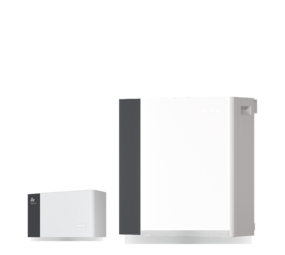
AlphaESS SMILE-G3 S5 inverter with...
AlphaESS SMILE-G3 S5 in...
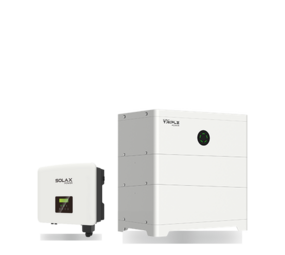
SolaX X1 Hybrid 5.0-G4 with two Tr...
SolaX X1 Hybrid 5.0-G4 ...
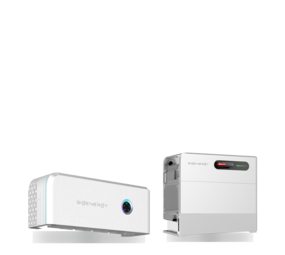
Sigen Energy Controller 6.0 kW (1-...
Sigen Energy Controller...
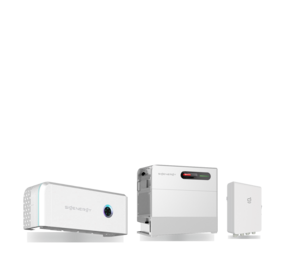
SigenStor 9.04 kWh single-phase wi...
SigenStor 9.04 kWh sing...
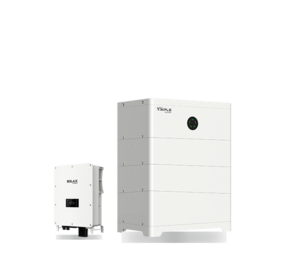
SolaX X3 Hybrid 5.0-G4 with three ...
SolaX X3 Hybrid 5.0-G4 ...
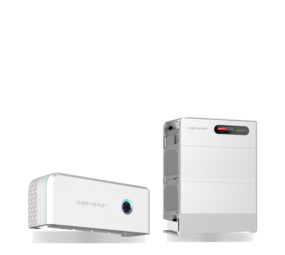
Sigen Energy Controller 6.0 kW (si...
Sigen Energy Controller...
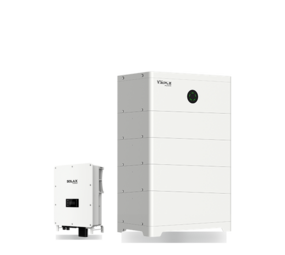
SolaX X3 Hybrid 5.0-G4 with four T...
SolaX X3 Hybrid 5.0-G4 ...
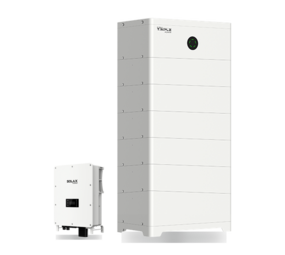
SolaX X3 Hybrid 5.0-G4 with six Tr...
SolaX X3 Hybrid 5.0-G4 ...