Home batteries
 Inverters
 EV chargers
 Energy management
 Accessories
 Installation
What is an energy management system?
An EMS measures your live electricity consumption and generation through the P1 port of your smart meter, or with a CT clamp around the main cable. Your battery or inverter uses that data to decide when charging or discharging makes sense. Without measurement your system runs on assumptions, with measurement it responds to what is actually happening in your home. The difference really shows once you combine a battery, an EV charger and solar panels: without an EMS the three operate independently, with an EMS they work together.
Which meter suits you?
If your battery and inverter come from the same manufacturer, the included or brand-own sensor is often enough, such as the Sigen Power Sensor with Sigenergy. If you combine equipment from different brands, you need a more universal solution such as the Bliq Energiemanager or a myenergi Harvi. Not sure? Send us your current brands and we will check compatibility for you.
Decision guide: which scenario matches your situation?
If you have a Sigenergy SigenStor with only the matching inverter, the built-in Sigen Power Sensor is enough. That costs you nothing extra, because it is already part of the system. If you add an EV charger from another brand, or want your old inverter to work with a new battery, you often run into the limits of the brand-own sensor. A household with, say, a GoodWe inverter from 2022 and a newly installed myenergi Zappi charger then needs a universal EMS unit of roughly €300 to €500, which reads both systems through separate CT clamps. And if you also want insight per appliance, for example measuring the washing machine or heat pump separately, you end up with a more extensive gateway with multiple connection points, and those start at around €500.
Brand-own sensor versus universal EMS
| Feature | Brand-own sensor | Universal EMS unit |
|---|---|---|
| Indicative price | Often included, or €75 to €150 | €180 to €700 |
| Compatibility | Only within the same brand ecosystem | Works with multiple brands of battery, inverter and EV charger |
| Installation | Often plug-and-play with the rest of the system | Needs configuration, sometimes per connected device |
| Functions | Basic: measuring consumption and generation for its own control | More extensive: prioritising between devices, per-circuit insight, dynamic contract integration |
| Best choice for | One brand of battery and inverter, no plans to expand | Multiple brands, or a need for detailed insight |
Price indication
As a rough guide, expect €75 to €90 for a simple sensor or CT clamp, and €180 to €700 for a complete gateway or EMS unit, depending on the number of measuring points and the functions. A system that only reads consumption and generation sits at the bottom of that range, a unit that also handles control and prioritisation between multiple devices at the top. Run these numbers for your own situation, it saves you a wrong purchase later on.
What should you look out for?
Not every meter works with every battery brand. Always check that your inverter supports the meter you have in mind before ordering, and check if your connection is single-phase or three-phase. That last point determines if you need one CT clamp or three. To be honest: for a household with exactly one brand and no plans to expand, an expensive universal EMS is often money down the drain, the brand-own sensor simply does its job.
What do we take care of?
We advise which meter matches your existing or new system, deliver at a sharp price, and work with certified installers who fit everything to the Dutch NEN 1010 standard. If you also want to make the most of your energy bill, we can connect you to a dynamic energy contract through our partner. No lock-in.
Frequently asked questions
Do I need an energy management system if I already have a battery?
Not necessarily, many batteries have a basic sensor built in. If you want several devices to work together or want to see exactly what you use, a separate EMS does add value.
Does a P1 port connection work with every smart meter?
Almost every Dutch smart meter installed after 2012 has a P1 port. On older meters, the grid operator can often activate or replace it free of charge.
Can I fit a CT clamp myself?
Technically you can, but the clamp usually sits close to the meter cupboard (the "meterkast" in Dutch homes) and the main connection. If in doubt, have a certified installer do it, that prevents mistakes and warranty issues.
Does this also work without solar panels?
Yes, an EMS is useful without panels too, for example to control your EV charger or battery based on dynamic electricity prices.
Can an energy management system also control my EV charger?
Yes, a universal EMS unit can often prioritise between battery, EV charger and household consumption, so you draw no more power from the grid than needed. Do check before buying that your charger brand is supported, see also our EV chargers.
Do I need to register my energy management system separately with the grid operator?
No, the installer only registers the battery or inverter itself, not the measuring equipment around it. The EMS is purely software and sensors on the inside of your meter cupboard.
If you are torn between a brand-own sensor and a universal EMS, take a look at our hybrid inverters too, because the inverter often determines which measuring options are available.
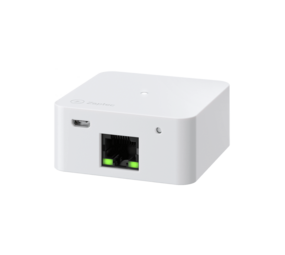
Zaptec Sense Generic voor meterkas...
Zaptec Sense Generic vo...
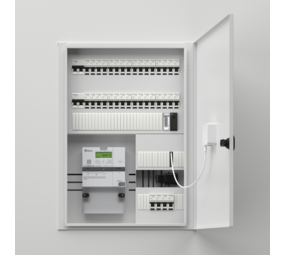
Zaptec Sense met 1-fase energiemet...
Zaptec Sense met 1-fase...
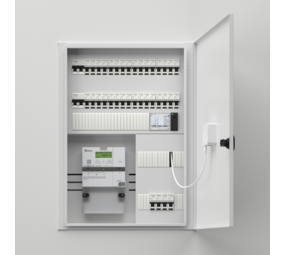
Zaptec Sense met bijpassende 3-fas...
Zaptec Sense met bijpas...
- Erkende installatie mogelijk
- Merkonafhankelijk advies
- Scherpe outletprijzen
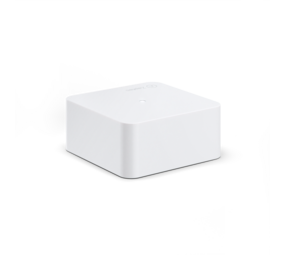
Zaptec Sense P1 leest je slimme me...
Zaptec Sense P1 leest j...
Solax M3-40 meter with CT (100 A),...
Solax M3-40 meter with ...
Sigen Energy Gateway HomePro TP (3...
Sigen Energy Gateway Ho...
Huawei Smart Module Controller MER...
Huawei Smart Module Con...
myenergi Eddi Plus incl. Relay Boa...
myenergi Eddi Plus incl...
Solax three-phase meter 80A, 400V ...
Solax three-phase meter...
Huawei Smart Module Controller MER...
Huawei Smart Module Con...
EcoFlow accessory smart meter P1, ...
EcoFlow accessory smart...
EcoFlow accessory Backup Gateway (...
EcoFlow accessory Backu...
Overige categorieën in Energy management
What is an energy management system?
An EMS measures your live electricity consumption and generation through the P1 port of your smart meter, or with a CT clamp around the main cable. Your battery or inverter uses that data to decide when charging or discharging makes sense. Without measurement your system runs on assumptions, with measurement it responds to what is actually happening in your home. The difference really shows once you combine a battery, an EV charger and solar panels: without an EMS the three operate independently, with an EMS they work together.
Which meter suits you?
If your battery and inverter come from the same manufacturer, the included or brand-own sensor is often enough, such as the Sigen Power Sensor with Sigenergy. If you combine equipment from different brands, you need a more universal solution such as the Bliq Energiemanager or a myenergi Harvi. Not sure? Send us your current brands and we will check compatibility for you.
Decision guide: which scenario matches your situation?
If you have a Sigenergy SigenStor with only the matching inverter, the built-in Sigen Power Sensor is enough. That costs you nothing extra, because it is already part of the system. If you add an EV charger from another brand, or want your old inverter to work with a new battery, you often run into the limits of the brand-own sensor. A household with, say, a GoodWe inverter from 2022 and a newly installed myenergi Zappi charger then needs a universal EMS unit of roughly €300 to €500, which reads both systems through separate CT clamps. And if you also want insight per appliance, for example measuring the washing machine or heat pump separately, you end up with a more extensive gateway with multiple connection points, and those start at around €500.
Brand-own sensor versus universal EMS
| Feature | Brand-own sensor | Universal EMS unit |
|---|---|---|
| Indicative price | Often included, or €75 to €150 | €180 to €700 |
| Compatibility | Only within the same brand ecosystem | Works with multiple brands of battery, inverter and EV charger |
| Installation | Often plug-and-play with the rest of the system | Needs configuration, sometimes per connected device |
| Functions | Basic: measuring consumption and generation for its own control | More extensive: prioritising between devices, per-circuit insight, dynamic contract integration |
| Best choice for | One brand of battery and inverter, no plans to expand | Multiple brands, or a need for detailed insight |
Price indication
As a rough guide, expect €75 to €90 for a simple sensor or CT clamp, and €180 to €700 for a complete gateway or EMS unit, depending on the number of measuring points and the functions. A system that only reads consumption and generation sits at the bottom of that range, a unit that also handles control and prioritisation between multiple devices at the top. Run these numbers for your own situation, it saves you a wrong purchase later on.
What should you look out for?
Not every meter works with every battery brand. Always check that your inverter supports the meter you have in mind before ordering, and check if your connection is single-phase or three-phase. That last point determines if you need one CT clamp or three. To be honest: for a household with exactly one brand and no plans to expand, an expensive universal EMS is often money down the drain, the brand-own sensor simply does its job.
What do we take care of?
We advise which meter matches your existing or new system, deliver at a sharp price, and work with certified installers who fit everything to the Dutch NEN 1010 standard. If you also want to make the most of your energy bill, we can connect you to a dynamic energy contract through our partner. No lock-in.
Frequently asked questions
Do I need an energy management system if I already have a battery?
Not necessarily, many batteries have a basic sensor built in. If you want several devices to work together or want to see exactly what you use, a separate EMS does add value.
Does a P1 port connection work with every smart meter?
Almost every Dutch smart meter installed after 2012 has a P1 port. On older meters, the grid operator can often activate or replace it free of charge.
Can I fit a CT clamp myself?
Technically you can, but the clamp usually sits close to the meter cupboard (the "meterkast" in Dutch homes) and the main connection. If in doubt, have a certified installer do it, that prevents mistakes and warranty issues.
Does this also work without solar panels?
Yes, an EMS is useful without panels too, for example to control your EV charger or battery based on dynamic electricity prices.
Can an energy management system also control my EV charger?
Yes, a universal EMS unit can often prioritise between battery, EV charger and household consumption, so you draw no more power from the grid than needed. Do check before buying that your charger brand is supported, see also our EV chargers.
Do I need to register my energy management system separately with the grid operator?
No, the installer only registers the battery or inverter itself, not the measuring equipment around it. The EMS is purely software and sensors on the inside of your meter cupboard.
If you are torn between a brand-own sensor and a universal EMS, take a look at our hybrid inverters too, because the inverter often determines which measuring options are available.