Home batteries
 Commercial energy storage
 EV chargers
 Installation
EV chargers
Cable or socket?
The first choice, and it is about convenience versus flexibility. A charger with a fixed cable you simply lift off the hook, nothing to get out of the boot. A charger with a socket works with your own charging cable, so you can also charge a car with a different plug type and keep the cable stored indoors. We see that people with one fixed car usually go for a cable, and that visitor addresses and businesses almost always choose a socket.
11 or 22 kW?
22 kW sounds better, but most electric cars cannot handle 22 kW at home at all. Many models charge on AC at a maximum of 11 kW, some even only 7.4 or 3.7. The charger then simply delivers less. A 22 kW charger is therefore mainly worthwhile if your car can handle it or if a different car will arrive in future. For someone who charges overnight it makes little difference: in eight hours, 11 kW already delivers far more than an average day's driving costs.
| Feature | 11 kW | 22 kW |
|---|---|---|
| Connection | three-phase, 16 A | three-phase, 32 A |
| In practice | full battery in one night | only faster if the car can handle it |
| Meter cupboard | often achievable without an upgrade | requires more from your connection |
| Best choice for | home charging, one car | a car that can handle 22 kW, or two cars |
MID meter: when do you need one?
An MID-certified meter in the charger counts the charged kilowatt-hours in a way that is legally usable for billing. If you drive for work and claim your home charging sessions from your employer or leasing company, you want that meter. If you charge purely privately, it is an extra you do not need.
Charging on your own solar power
Most chargers here can charge on your surplus, so you fill the car with power that would otherwise go back to the grid. That does need metering, usually via the P1 port or a CT clamp. How far that goes differs per brand: some chargers only switch between charging or not, others adjust steplessly with what the sun is doing. That is on the product page per charger.
What to watch out for
Load balancing. A charger at full power draws as much as a handful of kettles at once, and without a safeguard your main fuse trips if the oven is also on. We include load balancing as standard in the installation package instead of selling it as an option, because without it, it simply is not safe.
And an honest catch: if you still have a single-phase connection and drive little, a simple single-phase solution is often enough. Upgrading to three-phase costs money and time at the grid operator, and that does not pay off for a few thousand kilometres a year.
What we take care of
Supplying the charger, planning the site survey and a certified installer connecting it to the Dutch NEN 1010 standard. See home charger installation for what that involves, or business charger installation for multiple chargers. Cables, holders and load balancing modules are under accessories.
Frequently asked questions
Which plug does my car have?
Nearly every car sold in Europe charges on AC via Type 2. Only with older or imported models will you still come across something different.
Can the charger hang outside?
Yes, all chargers here are made for outdoor use. Do check the IP rating on the product page if the spot is very wet or dusty.
Do I need internet at the charger?
Not for regular charging. For smart charging on solar power, for updates and for billing, yes. If the charger is far from your router, look at a model with a mobile connection.
Can I charge two cars on one charger?
Not at the same time. One after the other, yes, or with a second charger that shares the available power with the first.
Does an EV charger work together with a home battery?
Yes, and with an energy management system they do not get in each other's way. See the home batteries if you are considering that combination.
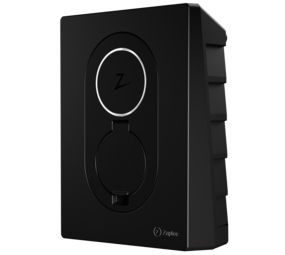
Zaptec Go 22 kW with type 2 socket...
Zaptec Go 22 kW with ty...
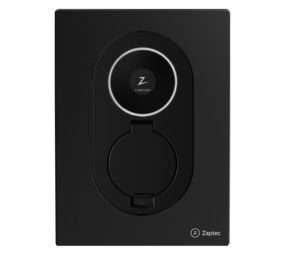
Zaptec Go 2 charging station, 22 k...
Zaptec Go 2 charging st...
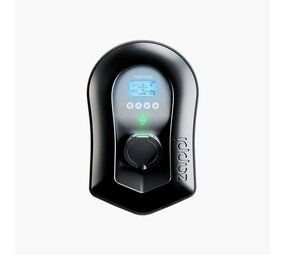
myenergi Zappi v2.1 - 2H22U Socket...
myenergi Zappi v2.1 - 2...
- Erkende installatie mogelijk
- Merkonafhankelijk advies
- Scherpe outletprijzen
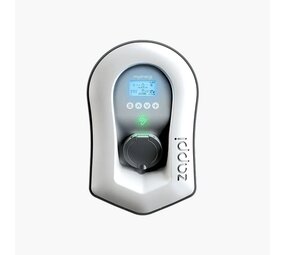
myenergi Zappi v2.1 - 2H22U EV cha...
myenergi Zappi v2.1 - 2...
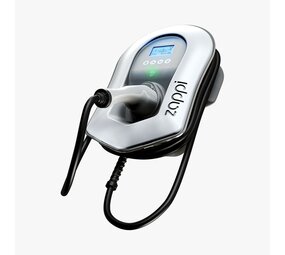
myenergi Zappi v2.1 - 2H22T EV cha...
myenergi Zappi v2.1 - 2...
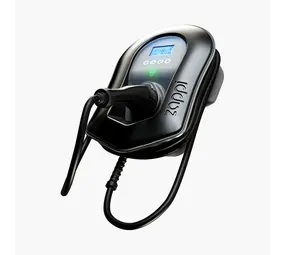
myenergi Zappi v2.1 - 2H22T EV cha...
myenergi Zappi v2.1 - 2...
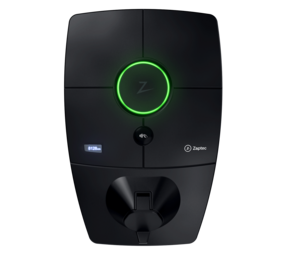
Zaptec Pro M&E 22 kW including bac...
Zaptec Pro M&E 22 kW in...
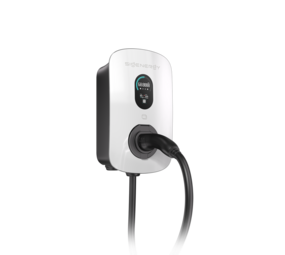
Sigen EVAC 11 kW 4G EV charger (So...
Sigen EVAC 11 kW 4G EV ...
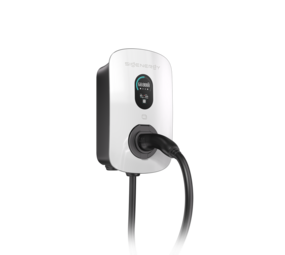
Sigen EVAC 22 kW 4G EV charger (So...
Sigen EVAC 22 kW 4G EV ...
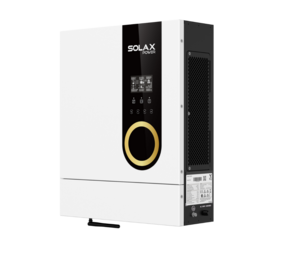
Solax X3-HAC-11S Hyper EV charger ...
Solax X3-HAC-11S Hyper ...
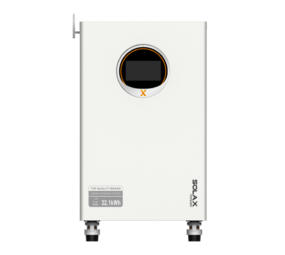
Solax X3-HAC-22S Hyper EV charger ...
Solax X3-HAC-22S Hyper ...
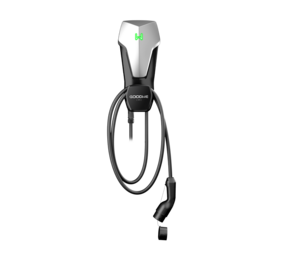
GoodWe EV Charger G2 22K, three-ph...
GoodWe EV Charger G2 22...
Overige categorieën in EV chargers
EV chargers
Cable or socket?
The first choice, and it is about convenience versus flexibility. A charger with a fixed cable you simply lift off the hook, nothing to get out of the boot. A charger with a socket works with your own charging cable, so you can also charge a car with a different plug type and keep the cable stored indoors. We see that people with one fixed car usually go for a cable, and that visitor addresses and businesses almost always choose a socket.
11 or 22 kW?
22 kW sounds better, but most electric cars cannot handle 22 kW at home at all. Many models charge on AC at a maximum of 11 kW, some even only 7.4 or 3.7. The charger then simply delivers less. A 22 kW charger is therefore mainly worthwhile if your car can handle it or if a different car will arrive in future. For someone who charges overnight it makes little difference: in eight hours, 11 kW already delivers far more than an average day's driving costs.
| Feature | 11 kW | 22 kW |
|---|---|---|
| Connection | three-phase, 16 A | three-phase, 32 A |
| In practice | full battery in one night | only faster if the car can handle it |
| Meter cupboard | often achievable without an upgrade | requires more from your connection |
| Best choice for | home charging, one car | a car that can handle 22 kW, or two cars |
MID meter: when do you need one?
An MID-certified meter in the charger counts the charged kilowatt-hours in a way that is legally usable for billing. If you drive for work and claim your home charging sessions from your employer or leasing company, you want that meter. If you charge purely privately, it is an extra you do not need.
Charging on your own solar power
Most chargers here can charge on your surplus, so you fill the car with power that would otherwise go back to the grid. That does need metering, usually via the P1 port or a CT clamp. How far that goes differs per brand: some chargers only switch between charging or not, others adjust steplessly with what the sun is doing. That is on the product page per charger.
What to watch out for
Load balancing. A charger at full power draws as much as a handful of kettles at once, and without a safeguard your main fuse trips if the oven is also on. We include load balancing as standard in the installation package instead of selling it as an option, because without it, it simply is not safe.
And an honest catch: if you still have a single-phase connection and drive little, a simple single-phase solution is often enough. Upgrading to three-phase costs money and time at the grid operator, and that does not pay off for a few thousand kilometres a year.
What we take care of
Supplying the charger, planning the site survey and a certified installer connecting it to the Dutch NEN 1010 standard. See home charger installation for what that involves, or business charger installation for multiple chargers. Cables, holders and load balancing modules are under accessories.
Frequently asked questions
Which plug does my car have?
Nearly every car sold in Europe charges on AC via Type 2. Only with older or imported models will you still come across something different.
Can the charger hang outside?
Yes, all chargers here are made for outdoor use. Do check the IP rating on the product page if the spot is very wet or dusty.
Do I need internet at the charger?
Not for regular charging. For smart charging on solar power, for updates and for billing, yes. If the charger is far from your router, look at a model with a mobile connection.
Can I charge two cars on one charger?
Not at the same time. One after the other, yes, or with a second charger that shares the available power with the first.
Does an EV charger work together with a home battery?
Yes, and with an energy management system they do not get in each other's way. See the home batteries if you are considering that combination.