Home batteries
 Commercial energy storage
 EV chargers
 Installation
Accessories
What belongs here?
Everything that sits around the charger itself. Charging cables for chargers with a socket, holders to keep that cable tidy, mounting poles for when there is no wall, and the modules that match the charging power to the rest of your house. It is the kind of gear you only miss on installation day, so run through this list before the installer arrives.
Load balancing: the most important part
A load balancing module measures what your house or building is using and scales back the charging power whenever needed. Tumble dryer running? The car charges a bit slower. House quiet? It charges at full power again. Without such a module you either have to cap the charger at a low power permanently, or risk your main fuse. There are two types: one that reads the P1 port of your smart meter, and one that measures with current clamps around the main cable. The first is simpler, the second also works where there is no usable P1 port.
Charging cables
With a charger that has a socket, you need your own cable. Watch two things: the length and the number of phases. A five-metre cable is enough if the car parks close to the charger, but with a driveway where the charging port is on the wrong side you will want seven or ten metres. And a single-phase cable limits your charging speed, even if the charger and the car can handle more. So buy a cable that matches what your car can do, not what it does today.
What to watch out for
Brand-specific parts. A load balancing module from one brand does not work with another brand's charger, however logical that would be. Charging cables are universal though, as long as you stick to Type 2. If in doubt, tell us your charger type and we will find the matching item.
And feel free to skip what you do not need: if you have a charger with a fixed cable and a wall to mount it on, you do not need a loose cable, a holder or a pole. Only the load balancing remains, and that is usually already part of the installation package.
What we take care of
We check that the accessories match your charger and deliver them together with the rest, so the installer does not get stuck halfway. Take a look at the chargers under EV chargers, and home EV charger installation for what is in the installation package.
Frequently asked questions
Which cable length should I choose?
Measure the distance from the charger to your car's charging port as parked, and add a metre of slack. Five metres is usually enough, ten metres is handy with a long driveway.
Is load balancing already included with the charger?
Some chargers have it built in, others need a separate module. That is stated on the charger's product page.
Can I mount a cable holder myself?
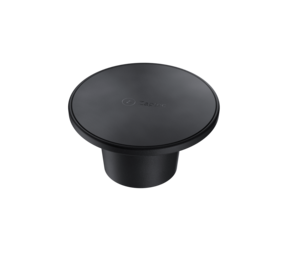
Yes, that is just drilling and screwing. Leave the wiring to the installer, but the holder you can do yourself.
Do I need a mounting pole?
Only if there is no suitable wall within reach of the cable route. Mounting on a wall is cheaper and faster.
Zaptec Chill wall-mounted cable ho...
Zaptec Chill wall-mount...
myenergi Zappi front cover (white)...
myenergi Zappi front co...
myenergi Zappi front cover (black)...
myenergi Zappi front co...
- Erkende installatie mogelijk
- Merkonafhankelijk advies
- Scherpe outletprijzen
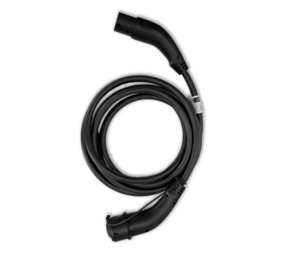
Zaptec type 2 to type 2 charging c...
Zaptec type 2 to type 2...
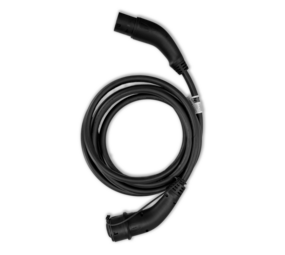
Zaptec type 2 to type 2 charging c...
Zaptec type 2 to type 2...
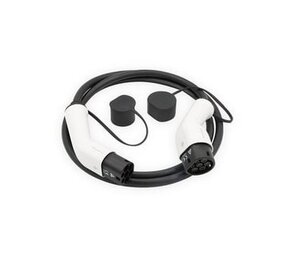
myenergi charging cable 3 metres b...
myenergi charging cable...
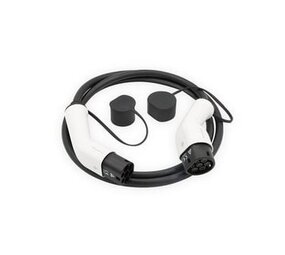
myenergi charging cable 5 metres b...
myenergi charging cable...
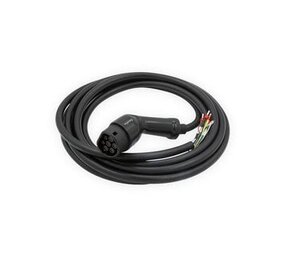
myenergi charging cable 6.5 metres...
myenergi charging cable...
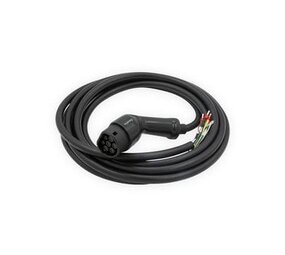
myenergi charging cable 6.5 metres...
myenergi charging cable...
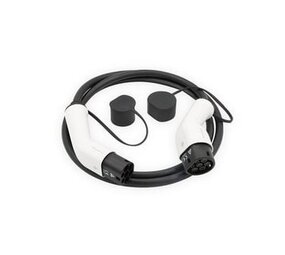
myenergi charging cable 7.5 metres...
myenergi charging cable...
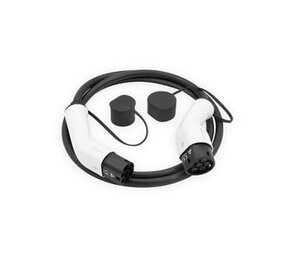
myenergi charging cable 10 metres ...
myenergi charging cable...
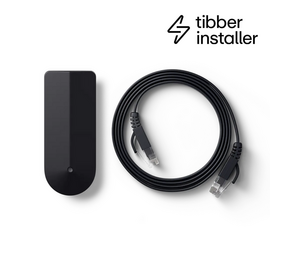
Tibber TI3002 Pulse P1 port link f...
Tibber TI3002 Pulse P1 ...
Overige categorieën in EV chargers
Accessories
What belongs here?
Everything that sits around the charger itself. Charging cables for chargers with a socket, holders to keep that cable tidy, mounting poles for when there is no wall, and the modules that match the charging power to the rest of your house. It is the kind of gear you only miss on installation day, so run through this list before the installer arrives.
Load balancing: the most important part
A load balancing module measures what your house or building is using and scales back the charging power whenever needed. Tumble dryer running? The car charges a bit slower. House quiet? It charges at full power again. Without such a module you either have to cap the charger at a low power permanently, or risk your main fuse. There are two types: one that reads the P1 port of your smart meter, and one that measures with current clamps around the main cable. The first is simpler, the second also works where there is no usable P1 port.
Charging cables
With a charger that has a socket, you need your own cable. Watch two things: the length and the number of phases. A five-metre cable is enough if the car parks close to the charger, but with a driveway where the charging port is on the wrong side you will want seven or ten metres. And a single-phase cable limits your charging speed, even if the charger and the car can handle more. So buy a cable that matches what your car can do, not what it does today.
What to watch out for
Brand-specific parts. A load balancing module from one brand does not work with another brand's charger, however logical that would be. Charging cables are universal though, as long as you stick to Type 2. If in doubt, tell us your charger type and we will find the matching item.
And feel free to skip what you do not need: if you have a charger with a fixed cable and a wall to mount it on, you do not need a loose cable, a holder or a pole. Only the load balancing remains, and that is usually already part of the installation package.
What we take care of
We check that the accessories match your charger and deliver them together with the rest, so the installer does not get stuck halfway. Take a look at the chargers under EV chargers, and home EV charger installation for what is in the installation package.
Frequently asked questions
Which cable length should I choose?
Measure the distance from the charger to your car's charging port as parked, and add a metre of slack. Five metres is usually enough, ten metres is handy with a long driveway.
Is load balancing already included with the charger?
Some chargers have it built in, others need a separate module. That is stated on the charger's product page.
Can I mount a cable holder myself?
Yes, that is just drilling and screwing. Leave the wiring to the installer, but the holder you can do yourself.
Do I need a mounting pole?
Only if there is no suitable wall within reach of the cable route. Mounting on a wall is cheaper and faster.