Home batteries
 Commercial energy storage
 EV chargers
 Installation
Which battery module suits you?
A battery module is not a ready-made system. It's a building block you connect to an inverter you already own, or one you buy alongside it. That makes it the logical choice if you have existing solar panels and want to add storage. If you're starting from scratch, an all-in-one system is sometimes simpler. For most households, 5 to 10 kWh is enough, expandable with extra modules as your consumption grows.
Two real-world situations make the difference clear straight away. If the two of you live in a terraced house with an annual consumption of 4,000 kWh and 8 solar panels, 5 kWh is often enough to run on solar power in the evening. With a family of four, a heat pump and an electric car, you quickly head towards 10 to 15 kWh, spread across two or three modules. Solar panels but no battery? Then a module is pointless until you also have a compatible hybrid inverter.
High voltage or low voltage?
Battery modules come in two voltage variants that are not interchangeable. The choice depends on the size of your system and what your inverter supports.
| Feature | High voltage (HV) | Low voltage (LV) |
|---|---|---|
| Best use | Systems from 10 kWh | Systems up to 10 kWh |
| Compatibility | Requires an HV-ready inverter | Often works with older inverters too |
| Efficiency when scaling up | Lower cable losses | Slightly more loss with many modules |
| Typical buyer | Larger household, heat pump, EV | Average household, simple expansion |
Torn between the two? Compare high-voltage modules and low-voltage modules side by side, or ask us for advice with your current inverter to hand.
What should you look out for?
The main stumbling block: brand pairing. A BYD module won't simply work with a Huawei inverter, or the other way round. Some combinations don't work at all, others only with a specific firmware version. So always check first which inverter you have or plan to buy, before picking a module. We give that advice free of charge, even if the answer is that a module doesn't fit and you're better off with another brand.
If you don't have an inverter yet, start with our hybrid inverters. A separate battery module never works without an inverter that can control the battery, and that is what sets this range apart from an all-in-one home battery.
What does a battery module cost?
Separate battery modules, high voltage and low voltage combined, range roughly between €750 and €3,700. Indicative, as prices vary by version and capacity. A small LV module with limited kWh sits at the bottom of that range, a large HV module for an extensive system at the top. Installation comes on top of that and depends on your meter cupboard (the "meterkast" in Dutch homes) and the number of modules.
What do we take care of?
Sharp pricing, certified installation to the Dutch NEN 1010 standard, and a dynamic energy contract through our partner if you want one. No lock-in; you decide if and when to switch. Net metering in the Netherlands ends in 2027, and that is when smart charging and discharging on dynamic prices gets really interesting.
The honest catch: a battery module is not the simplest route to storage. You need to know which brand of inverter you have or will choose, and that choice ties you to that brand for years when it comes to expansion. If you'd rather skip that homework, a home battery as a complete system is sometimes a more comfortable place to start.
Frequently asked questions
Can I use a battery module from a different brand than my inverter?
Usually not. Most manufacturers link their modules and inverters with a proprietary protocol, so a BYD module needs a BYD-compatible inverter. Enphase is the exception here with its AC-coupled system. If in doubt, ask us before you order.
Can I add another module later?
With most brands, yes, up to a certain maximum per inverter. That maximum varies by brand and model. We state it for every product so you're not caught out afterwards.
Do I need a new inverter with this?
Not necessarily. If you already have a hybrid inverter from a compatible brand, the module on its own is enough. If you have a standard string inverter without a battery connection, you'll need a hybrid inverter as well.
What does installation cost?
That depends on your situation, the number of modules and the state of your meter cupboard. We provide a tailored quote after a short intake, including the NEN 1010 inspection.
How many modules can I combine for 15 kWh?
It varies by brand, but with most HV systems two to three modules of 5 to 8 kWh will get you to that capacity. With LV you often need more, smaller modules to achieve the same. We work this out for you based on the brand you already have.
Is a battery module suitable for business use?
For small-scale business use it can be, but for larger commercial storage needs you're better off looking at our range of three-phase hybrid inverters combined with multiple modules, or contact us for tailored advice.
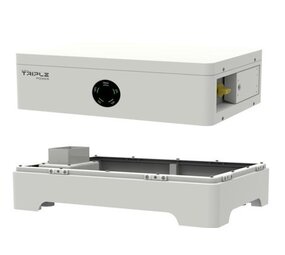
Solax Triple battery BMS MCS0800 S...
Solax Triple battery BM...
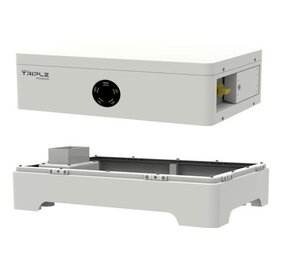
Solax Triple battery BMS S51-8. Ce...
Solax Triple battery BM...
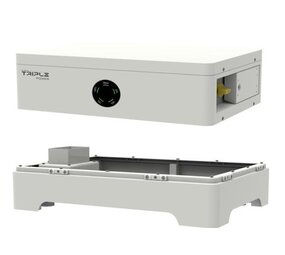
Solax Triple battery BMS S51-8 (Op...
Solax Triple battery BM...
- Erkende installatie mogelijk
- Merkonafhankelijk advies
- Scherpe outletprijzen
AlphaESS battery 4.5kWh SMILE-G3-B...
AlphaESS battery 4.5kWh...
AlphaESS battery 3.8kWh SMILE-G3-B...
AlphaESS battery 3.8kWh...
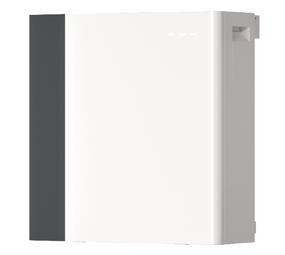
AlphaESS battery 9.3kWh SMILE-G3-B...
AlphaESS battery 9.3kWh...
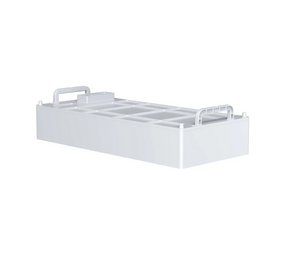
BYD Battery-Box HVB 2.97kWh. Certi...
BYD Battery-Box HVB 2.9...
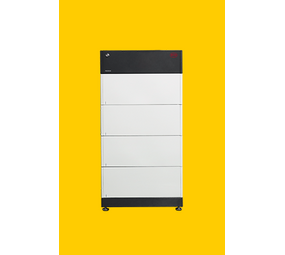
BYD Battery-Box module HVM+ 2.76kW...
BYD Battery-Box module ...
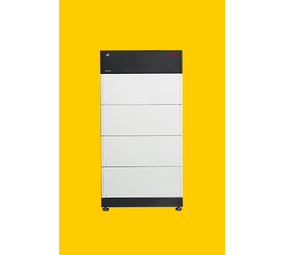
BYD Battery-Box module HVS+ 2.56kW...
BYD Battery-Box module ...
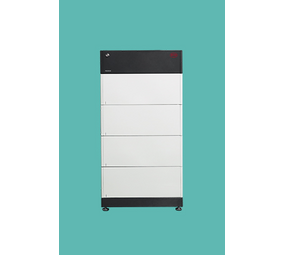
BYD Battery-Box LVS 4.0kWh. Certif...
BYD Battery-Box LVS 4.0...
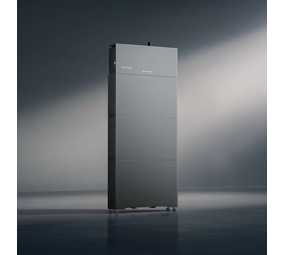
EcoFlow battery PowerOcean LFP, 5....
EcoFlow battery PowerOc...
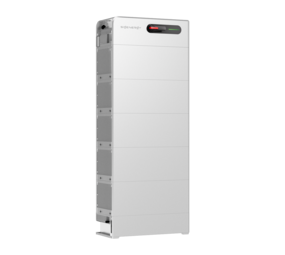
The SigenStor Battery 10.0 (9.04 k...
The SigenStor Battery 1...
Overige categorieën in Home batteries
Which battery module suits you?
A battery module is not a ready-made system. It's a building block you connect to an inverter you already own, or one you buy alongside it. That makes it the logical choice if you have existing solar panels and want to add storage. If you're starting from scratch, an all-in-one system is sometimes simpler. For most households, 5 to 10 kWh is enough, expandable with extra modules as your consumption grows.
Two real-world situations make the difference clear straight away. If the two of you live in a terraced house with an annual consumption of 4,000 kWh and 8 solar panels, 5 kWh is often enough to run on solar power in the evening. With a family of four, a heat pump and an electric car, you quickly head towards 10 to 15 kWh, spread across two or three modules. Solar panels but no battery? Then a module is pointless until you also have a compatible hybrid inverter.
High voltage or low voltage?
Battery modules come in two voltage variants that are not interchangeable. The choice depends on the size of your system and what your inverter supports.
| Feature | High voltage (HV) | Low voltage (LV) |
|---|---|---|
| Best use | Systems from 10 kWh | Systems up to 10 kWh |
| Compatibility | Requires an HV-ready inverter | Often works with older inverters too |
| Efficiency when scaling up | Lower cable losses | Slightly more loss with many modules |
| Typical buyer | Larger household, heat pump, EV | Average household, simple expansion |
Torn between the two? Compare high-voltage modules and low-voltage modules side by side, or ask us for advice with your current inverter to hand.
What should you look out for?
The main stumbling block: brand pairing. A BYD module won't simply work with a Huawei inverter, or the other way round. Some combinations don't work at all, others only with a specific firmware version. So always check first which inverter you have or plan to buy, before picking a module. We give that advice free of charge, even if the answer is that a module doesn't fit and you're better off with another brand.
If you don't have an inverter yet, start with our hybrid inverters. A separate battery module never works without an inverter that can control the battery, and that is what sets this range apart from an all-in-one home battery.
What does a battery module cost?
Separate battery modules, high voltage and low voltage combined, range roughly between €750 and €3,700. Indicative, as prices vary by version and capacity. A small LV module with limited kWh sits at the bottom of that range, a large HV module for an extensive system at the top. Installation comes on top of that and depends on your meter cupboard (the "meterkast" in Dutch homes) and the number of modules.
What do we take care of?
Sharp pricing, certified installation to the Dutch NEN 1010 standard, and a dynamic energy contract through our partner if you want one. No lock-in; you decide if and when to switch. Net metering in the Netherlands ends in 2027, and that is when smart charging and discharging on dynamic prices gets really interesting.
The honest catch: a battery module is not the simplest route to storage. You need to know which brand of inverter you have or will choose, and that choice ties you to that brand for years when it comes to expansion. If you'd rather skip that homework, a home battery as a complete system is sometimes a more comfortable place to start.
Frequently asked questions
Can I use a battery module from a different brand than my inverter?
Usually not. Most manufacturers link their modules and inverters with a proprietary protocol, so a BYD module needs a BYD-compatible inverter. Enphase is the exception here with its AC-coupled system. If in doubt, ask us before you order.
Can I add another module later?
With most brands, yes, up to a certain maximum per inverter. That maximum varies by brand and model. We state it for every product so you're not caught out afterwards.
Do I need a new inverter with this?
Not necessarily. If you already have a hybrid inverter from a compatible brand, the module on its own is enough. If you have a standard string inverter without a battery connection, you'll need a hybrid inverter as well.
What does installation cost?
That depends on your situation, the number of modules and the state of your meter cupboard. We provide a tailored quote after a short intake, including the NEN 1010 inspection.
How many modules can I combine for 15 kWh?
It varies by brand, but with most HV systems two to three modules of 5 to 8 kWh will get you to that capacity. With LV you often need more, smaller modules to achieve the same. We work this out for you based on the brand you already have.
Is a battery module suitable for business use?
For small-scale business use it can be, but for larger commercial storage needs you're better off looking at our range of three-phase hybrid inverters combined with multiple modules, or contact us for tailored advice.