Home batteries
 Inverters
 EV chargers
 Energy management
 Accessories
 Installation
Which HV battery module suits you?
HV stands for high voltage: a higher voltage per module, so you store the same power with fewer cables and less loss. That makes HV systems attractive once you head towards 10 kWh or more, for example a larger household or a home with a heat pump and an electric car. For a small household with modest consumption, HV is quickly overkill; a low-voltage module often does the job just as well and is sometimes more widely compatible.
When should you choose HV, and when not?
Choose HV if you already know you're heading for 10 to 15 kWh, or if your inverter requires HV or was specifically designed for it. Don't choose HV if you want a smaller system of 5 to 8 kWh, or if your current inverter only supports low voltage. Switching from an existing LV system to HV usually means adding a new inverter, and that is no small change.
What should you look out for?
The hybrid inverter must explicitly support HV. It's in the specifications, but it does get overlooked when putting a system together. The number of modules you can connect in series also varies by brand. If you plan to expand, check beforehand that your inverter allows it.
The honest catch: HV is not better by definition, it is better at scale. For an average household with 5 to 8 kWh of storage, you sometimes pay more for an advantage you barely notice. For that situation, also have a look at low-voltage modules, often at a similar price per kWh and with broader compatibility with older inverters.
What do we take care of?
Sharp pricing, certified installation to the Dutch NEN 1010 standard, and a dynamic energy contract through our partner if you want to charge and discharge smartly. No lock-in. With net metering in the Netherlands ending in 2027, an efficient HV system becomes all the more worthwhile for heavy users.
Frequently asked questions
Is HV always more efficient than LV?
For larger systems, yes; for small systems the difference is negligible. HV's advantage lies in lower cable losses as you store more power, and that only really counts from about 10 kWh upwards.
Can I mix HV and LV in one system?
No, they don't combine. Your inverter is designed for one of the two voltage levels, and you can't connect modules of the other type to it.
Which HV brands do you stock?
BYD, Huawei and GoodWe, among others, offer HV modules, each with their own range of compatible inverters. Check each product to see which inverters match.
Can I expand within HV later?
Usually yes, up to the maximum your inverter allows. That maximum varies by brand and is listed on every product page, so you know beforehand how far you can grow.
Back to the full overview: all battery modules.
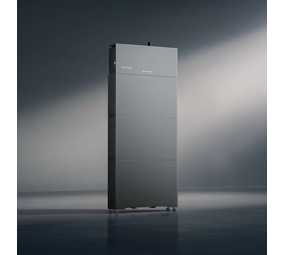
EcoFlow battery PowerOcean LFP, 5....
EcoFlow battery PowerOc...
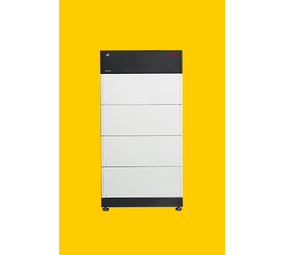
BYD Battery-Box module HVS+ 2.56kW...
BYD Battery-Box module ...
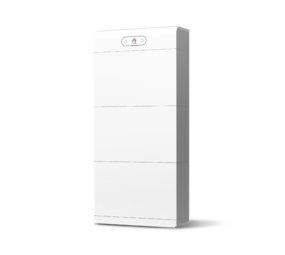
Huawei Battery Module LUNA2000-7-E...
Huawei Battery Module L...
- Erkende installatie mogelijk
- Merkonafhankelijk advies
- Scherpe outletprijzen
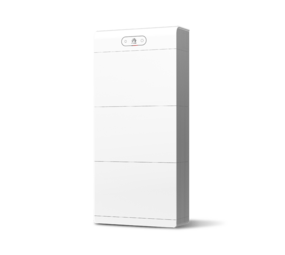
Huawei Battery Module LUNA2000-5-E...
Huawei Battery Module L...
Huawei accessory Battery Power Mod...
Huawei accessory Batter...
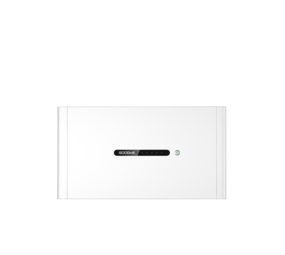
GoodWe Lynx LX D 5.0-10 battery, H...
GoodWe Lynx LX D 5.0-10...
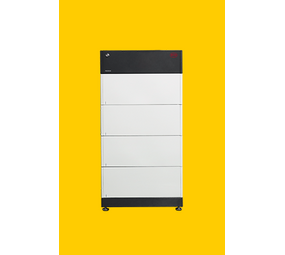
BYD Battery-Box module HVM+ 2.76kW...
BYD Battery-Box module ...
BYD Battery-Box HVB 2.97kWh. Certi...
BYD Battery-Box HVB 2.9...
Overige categorieën in Home batteries
Which HV battery module suits you?
HV stands for high voltage: a higher voltage per module, so you store the same power with fewer cables and less loss. That makes HV systems attractive once you head towards 10 kWh or more, for example a larger household or a home with a heat pump and an electric car. For a small household with modest consumption, HV is quickly overkill; a low-voltage module often does the job just as well and is sometimes more widely compatible.
When should you choose HV, and when not?
Choose HV if you already know you're heading for 10 to 15 kWh, or if your inverter requires HV or was specifically designed for it. Don't choose HV if you want a smaller system of 5 to 8 kWh, or if your current inverter only supports low voltage. Switching from an existing LV system to HV usually means adding a new inverter, and that is no small change.
What should you look out for?
The hybrid inverter must explicitly support HV. It's in the specifications, but it does get overlooked when putting a system together. The number of modules you can connect in series also varies by brand. If you plan to expand, check beforehand that your inverter allows it.
The honest catch: HV is not better by definition, it is better at scale. For an average household with 5 to 8 kWh of storage, you sometimes pay more for an advantage you barely notice. For that situation, also have a look at low-voltage modules, often at a similar price per kWh and with broader compatibility with older inverters.
What do we take care of?
Sharp pricing, certified installation to the Dutch NEN 1010 standard, and a dynamic energy contract through our partner if you want to charge and discharge smartly. No lock-in. With net metering in the Netherlands ending in 2027, an efficient HV system becomes all the more worthwhile for heavy users.
Frequently asked questions
Is HV always more efficient than LV?
For larger systems, yes; for small systems the difference is negligible. HV's advantage lies in lower cable losses as you store more power, and that only really counts from about 10 kWh upwards.
Can I mix HV and LV in one system?
No, they don't combine. Your inverter is designed for one of the two voltage levels, and you can't connect modules of the other type to it.
Which HV brands do you stock?
BYD, Huawei and GoodWe, among others, offer HV modules, each with their own range of compatible inverters. Check each product to see which inverters match.
Can I expand within HV later?
Usually yes, up to the maximum your inverter allows. That maximum varies by brand and is listed on every product page, so you know beforehand how far you can grow.
Back to the full overview: all battery modules.